Our Mission
The Mission of the Certified Public Accountant Political Action Committee (CPA-PAC) is…
To promote and strive for the improvement of government by encouraging, stimulating, and providing opportunity for certified public accountants (CPAs) and others to take a more active role in political and governmental activities that affect the Commonwealth of Pennsylvania and its citizenry.
CPA-PAC provides financial support on a bipartisan basis for the election of candidates for statewide office in the following categories: state House, state Senate, governor, attorney general, auditor general, treasurer, and statewide courts. In addition to direct candidate support, CPA-PAC may contribute to caucus committees, political party committees, and other state organizations aligned with PICPA’s legislative priorities.
Dear CPA-PAC Investors and Friends,
As we look back on the first year of Pennsylvania’s current two-year legislative session, we are proud of what we accomplished together. Your steadfast commitment to the CPA-PAC fuels our advocacy efforts and strengthens the voice of the CPA profession. Thanks to the generosity of PICPA members, CPA-PAC raised more than $200,000 — a powerful testament to our collective investment in protecting and advancing our profession.
CPA-PAC is funded solely through voluntary, personal contributions. By law, neither membership dues nor corporate funds may be used to support the PAC. Your individual support makes it possible for us to engage meaningfully in the legislative process and achieve real results on a bipartisan basis.
In 2025, the split Pennsylvania General Assembly had historically low bill movement, largely stemming from extended state budget negotiations. Despite the challenges, the session produced one historic victory for the profession. Senate Bill 719 — PICPA-backed legislation to modernize and reform Pennsylvania’s CPA Law — was unanimously enacted as Act 27 of 2025. Its passage represents a generational achievement and will have lasting impact on the accounting profession.
"Your individual support makes it possible for us to engage meaningfully in the legislative process and achieve real results on a bipartisan basis."
As detailed in our Professional Issues Tracker, 2025 also brought complex technical developments. The PICPA played a key role in supporting members’ understanding of Act 45 of 2025, which significantly revised Pennsylvania’s corporate net income tax (CNIT) by decoupling from federal provisions enacted under the One Big Beautiful Bill Act (OBBBA) of 2025.
Equally important is our defense against proposals that would harm taxpayers and the CPA profession, including House Bills 1551 and 1552 and the Pennsylvania False Claims Act (House Bill 1697). Each of these measures would make tax compliance in Pennsylvania more costly, more complicated, and less efficient.
These outcomes underscore the effectiveness of PICPA’s advocacy — particularly in an environment where only about 6% of introduced legislation ultimately becomes law.
Looking ahead, we remain focused and energized. Statewide elections in 2026 and a new state budget will dominate the landscape in Harrisburg, and CPA-PAC is ready for the challenges ahead.
CPA-PAC contributions are distributed thoughtfully and on a bipartisan basis to candidates who understand and support the CPA profession. As we enter the next phase of the legislative session and upcoming election season, your continued engagement is essential. Together, we will meet new challenges, capitalize on opportunities, and shape policies that strengthen our profession and serve the public interest.
Thank you for your leadership, your partnership, and your ongoing investment in our advocacy work.

R. Charles Waring, CPA
CPA-PAC Chair

Jennifer Cryder, CPA
Chief Executive Officer
Pennsylvania Institute of CPAs
The PICPA delivers feedback to state legislators in several ways: we reach out personally with nonpartisan policy comments and through the CPA-PAC we financially support candidates on a bipartisan basis who understand the importance of CPAs. Much of our communication with Pennsylvania’s lawmakers comes from our volunteer members and the steering and thought leadership committees on which they serve. Thanks to the leadership of the CPA-PAC board of trustees, we had another successful year.
Act 27 of 2025
Modernizing the CPA Profession
Through sustained advocacy and in an unprecedented 16 legislative session days, the PICPA secured unanimous passage of Act 27 of 2025, a sweeping modernization of Pennsylvania’s CPA licensure law. Signed by Gov. Josh Shapiro on June 30, the legislation expanded the available pathways into the profession and positioned Pennsylvania as the first state in the nation with the new pathway in effect. It was a decisive step forward during a session when overall legislative output was muted.
Act 27 of 2025 directly addresses longstanding concerns about a shrinking CPA pipeline and the rising cost of accounting education. Its new pathway to CPA licensure is a bachelor’s degree, passage of the Uniform CPA Examination, and two years of qualifying work experience. This option complements the existing pathways: passing the CPA Exam plus obtaining 150 credit hours and one year of work experience or a master’s degree and one year of experience. The new option preserves the profession’s high standards while removing a widely viewed barrier to entry – the expense and time needed for extra education. The legislation also extends the exam completion window from 18 to 30 months, better reflecting the realities of balancing work, education, and personal responsibilities.
A cornerstone of Act 27 is the adoption of automatic mobility for out-of-state CPAs. Under this framework – often described as a “driver's license” model – CPAs licensed in other jurisdictions who meet Pennsylvania's education and experience standards may practice in the Commonwealth without obtaining a separate Pennsylvania license. This change supports workforce mobility in an increasingly national and interconnected marketplace.
These are the most significant updates to Pennsylvania's CPA Law in decades. The PICPA's role in achieving passage of Act 27 was instrumental. Years of sustained advocacy, relationship-building with lawmakers, and coordinated member engagement across Pennsylvania culminated in broad legislative support. From grassroots outreach, to district office contact, to testimony and strategic policy briefings, the PICPA helped lawmakers understand how modernizing licensure strengthens both the profession and Pennsylvania's broader economic competitiveness.
May 6, 2025
Senate Bill 719 introduced in Senate by Sens. Hutchinson and Pisciottano
June 3, 2025
Reported from Senate Licensure Committee
June 11, 2025
Approved by Senate (49-0) and referred to House Licensure Committee
June 24, 2025
Reported from House Licensure Committee
June 26, 2025
Approved by House (202-0)
June 30, 2025
Governor signs bill into law
Education
Experience
Exam
Path 1
Current
Master's Degree
1 Year of Relevant Work Experience
CPA Exam
Path 2
Current
150 Credit Hours
1 Year of Relevant Work Experience
CPA Exam
Path 3
New
Bachelor's Degree
2 Years of Relevant Work Experience
CPA Exam
*Bachelor’s coursework must include the required accounting concentrations plus 2 years of relevant work experience as currently defined in regulation.
-26.jpg?sfvrsn=d2ba4190_2 "6_4_25_PICPA(DayOnTheHill)-26")
Accounting students from Westminster College, joined by Assistant Professor Keith Bittel, CPA, attended PICPA's Day on the Hill. Pictured left to right: Keith Bittel, Cade Hancox, Morgan Kaylor, Haley Bittel, and Sabrina Devite.
H.R. 347
CPA Week in Pennsylvania
House Resolution 347 designated Nov. 11 to Nov. 17, 2025, as “CPA Week in Pennsylvania.” The resolution highlights the PICPA, which was founded in 1897 and represents over 18,000 professionals in public practice, industry, government, and education, and emphasizes the essential role CPAs play in Pennsylvania's economy. The PICPA thanks Reps. Ben Sanchez, CPA-Inactive (D-Montgomery), and Keith Greiner, CPA (R-Lancaster), for sponsoring the resolution and for their commitment to Pennsylvania’s CPA community.
The State Budget
A Legislative Road Block
The 2025-2026 fiscal year state budget was supposed to have been approved by July 1, 2025. It was not signed into law until Nov. 12.
Starting Point:
$51.5B
proposed on Feb. 4
House Approved Plan
$50.6B
passed House on July 14
Sticking Point:
- Overall Spend
- Transportation
- Education
Senate Approved Plan
$47.6B
passed Senate on Aug. 12
State Budget Passage
$50.1B
signed into law on Nov. 12
Major Legislative Victories
2025 Legislative Session
Pennsylvania has the largest full-time legislative body in the country, with 253 lawmakers in the state House and Senate. There were 3,235 pieces of legislation filed between the House (2,108) and Senate (1,127) in 2025.
Only 2% (65) of the general pieces of legislation became law in 2025. This is a new low for at least the past decade.
One bill and one resolution that the PICPA initiated or heavily supported became law.
The Pennsylvania General Assembly passed and the governor signed into law 65 general pieces of legislation in 2025.
Return of Day on the Hill:
Success Beyond Expectation
The 2025 PICPA Day on the Hill, held June 4, 2025, in Harrisburg, brought together CPAs from across the state to engage directly with state lawmakers, advocate for the profession, and discuss key legislative issues.
The event commenced with a networking reception on the evening of June 3 that offered attendees an opportunity to connect with state House and Senate leadership, state row officers, as well as fellow CPA professionals. On June 4, participants convened at the Capitol Complex and engaged in discussions with legislators about PICPA’s CPA modernization legislation, tax proposals, and other matters pertinent to the accounting field.
The Day on the Hill program emphasized the importance of CPAs’ involvement in the legislative process, highlighting their role in shaping policies that impact the profession and the broader business community.

Attendees of PICPA's 2025 Day on the Hill outside the Pennsylvania Capitol.
"Advocacy is at the heart of PICPA's mission.
We exist to promote and protect the CPA profession, to be your voice in Harrisburg and beyond, and to champion positions that matter to you. We work proactively to advance proposals that benefit our members and push back against those that could harm the profession.”
— Jen Cryder, CPA and PICPA CEO, addressing nearly 100 attendees at Day on the Hill
Day on the Hill Speakers
-66.jpg?sfvrsn=438a4190_2&Width=350&Height=275&ScaleUp=false&Quality=High&Method=CropCropArguments&Signature=2FDAA8BD97624DF3733ECAB94EEDA425 "6_4_25_PICPA(DayOnTheHill)-66")
State Sen. Nick Pisciottano, CPA-Inactive
(D-Allegheny)
-84.jpg?sfvrsn=a28a4190_2&Width=350&Height=275&ScaleUp=false&Quality=High&Method=CropCropArguments&Signature=C22E83E3EA9E6F54BEAA7320AA9ABB76 "6_4_25_PICPA(DayOnTheHill)-84")
State Rep. Keith Greiner, CPA (R-Lancaster)
-120.jpg?sfvrsn=8f8a4190_3&Width=350&Height=275&ScaleUp=false&Quality=High&Method=CropCropArguments&Signature=8E55E80B0C942F59ECC08B0DF9BD9970 "6_4_25_PICPA(DayOnTheHill)-120")
PICPA CEO Jennifer Cryder
-144.jpg?sfvrsn=e68a4190_2&Width=350&Height=275&ScaleUp=false&Quality=High&Method=CropCropArguments&Signature=EA0C265344AE11415A0AF403586BDE10 "6_4_25_PICPA(DayOnTheHill)-144")
Pennsylvania Department of Revenue Secretary Pat Browne
The CPA-PAC is a bipartisan, member-directed political action committee dedicated exclusively to representing Pennsylvania CPAs. Our supporters include professionals in public practice, business and industry, government, and both emerging and seasoned members of the profession. No other PAC exists solely to advocate for the interests of CPAs across the Commonwealth.
In 2025, CPA-PAC disbursed $218,822 to 111 candidates who support issues important to PICPA members. Contributions were also made to ChamberPAC and the campaign finance committees for House and Senate Republicans and Democrats. All requests for support are evaluated individually and approached with a bipartisan focus.
While inflationary pressures affected fundraising, CPA-PAC raised $202,000 in 2025, compared with $208,000 in 2024.
2025
$0dispersed by the CPA-PAC in 2025
to the campaigns of the Pennsylvania candidates who endorsed positions favorable to PICPA members, as well as legislative committees. Contribution requests were considered on a case-by-case basis and addressed in a bipartisan manner.
$0raised by the CPA-PAC in 2025
520
individuals contributed in 2025
72
contributed for the first time
45
large, medium, and small firms contributed
2024
$0raised by the CPA-PAC in 2024
564
individuals contributed in 2024
77
contributed for the first time
27
large, medium, and small firms contributed
Lifecycle of a contribution
Member contributes
CPA-PAC Board strategically allocates funds to campaigns
CPA-PAC
builds allies
in Harrisburg
who support
PICPA’s agenda
PICPA gains expanded influence
Thank you to all of the 2025 CPA-PAC donors. Our successes would not have been possible without your support.
Firm Contributors
Diamond
$15,000 and above (includes pledges)





Platinum
$7,500 - $14,999

Gold
$2,500 - $7,499


Bronze
$100 - $999
- Barsz Gowie Amon & Fultz
- Black Bashor & Porsch LLP
- Boles Metzger Brosius & Walborn
- Brian T. Kelly, CPA & Associates
- CFO Strategies LLC
- Flowers & Flowers
- Forvis Mazars LLP
- Hatter Harris & Beittel LLP
- Jacob Cohen CPA LLC
- Joseph P Melvin Company LLC
- Kelly Welde & Co LLP
- Kitay Lawrence Rauker & Assoc.
- McCall Scanlon & Tice LLC
- Reinhart & Company CPAs
- Whisman Giordano & Associates LLC
Individual Contributors
Keystone Club
$500 and above
- Peter Barsz
- Kathy Bell
- Robert Bryan
- Stephen Christian
- Edward Conley
- Jennifer CruverKibi
- Paul Fisher
- Cheri Freeh
- Jill Goldstein
- Emily Gunther
- John Jarzab
- Jeffrey Kent
- George Kotridis
- Elizabeth Krisher
- William R. Lazor
- Dana Lemesh
- Amy Lewis
- John Maher
- Brian McCall
- Lisa Myers
- Aaron Risden
- Thomas Taricani
- R. Charles Waring
- James Watson
- Andrew Young
President's Club
$250 - $499
- Matthew Baker
- Ashley Barber
- Jason Barnes
- Kerri Bogda
- Debra Bowes
- Andrea Caladie
- David Capitano
- Jeremy Chapman
- Ivan Cilik
- John Compton
- Matthew Damone
- Brandon DeCecco
- James Dinsmore
- David Duessel
- Heather Dwyer
- Jeffrey Ferro
- Edmund Fosu-Laryea
- Scott Frankenfield
- Wesley Fraser
- Joseph Giordano
- Nicolas Glorieux
- Mallory White Good
- John Guido
- Brandon Harlan
- Gail Hauseman
- Danielle Hawley
- Patrick Heavens
- Christopher Hegarty
- Howard Heyman
- Kevin Highlander
- Timothy Hilbert
- Caroline Hipple
- Michael Hoffner
- Robert Hornick
- Kristyn Howell
- Kenneth Hugendubler
- K. James Hunt
- Keith Hutcheson
- Brian Kassalen
- Christopher Kassay
- Zachary Keenan
- Michael Kehoe
- Michael Kennedy
- Peter Kern
- Michael Kessler
- Paul Kinmartin
- Edward Klik
- Jeffrey Kowalczyk
- Charles Kronmiller
- Jeffrey Krull
- Steven Kutsuflakis
- Jacob Kutz
- James Lawson
- Andrew Lee
- Brian Lenart
- Theodore Lopez
- Michael Malinoski
- Joseph Manfre
- Jill Martin
- Fred Massanova
- Paul Maulfair
- James McGrory
- Jonathan Mentzer
- Michael Miller
- Joseph Pellerite
- Chris Phillips
- Heather Pleskonko
- James Raley
- Steven Repko
- Matthew Robbins
- Mark Ross
- Timothy Sawyer
- Jennifer Schwalm
- Christopher Short
- Russell Sommers
- Jeffrey Spengler
- Anthony Stagliano
- Kim Staudt
- David Stonesifer
- Mark Thomas
- Christopher Turtell
- Jeffrey Vrabel
- Thomas Walenchok
- Michael Wascura
- Derek West
- Nathan White
- Marlin Witt
- Jonathan Zeigler
Century Club
$100 - $249
- Lewis Aronow
- Thomas Balestreire
- Robert Belicose
- Mitchell Benson
- Raymond Bilinski
- Jay Bornstein
- John Bosley
- Deborah Bowman
- Jeffrey Broker
- Ryan Brown
- Paul Cannataro
- David Caplan
- Natalie Caponi
- Anthony Caravaggio
- Alan Carman
- Joseph Cawley
- Gerald Chotiner
- Jeffrey Chrin
- Gary Claus
- Robert Coar
- Dominic Coccia
- Daniel Collins
- Carmen Conicelli
- Richard Coyne
- Sherry Cracium
- Nicholas Crocetti
- Martin Darocha
- Roger Davis
- James DeLizzio
- Robert DePasquale
- Lewis Doub
- Francis Eick
- Mario Ercolani
- Scott Esworthy
- Randy Fackler
- Lauren Fenner
- Philip Fisher
- Richard Flowers
- Kevin Foley
- Matthew Fox
- William Friedline
- Steven Geisenberger
- Barry Gerber
- Barry Groebel
- Timothy Grunstra
- Larry Hankinson
- Susan Hart
- Christopher Hastings
- Dennis Heller
- Scott Henry
- Ashley Hershey
- E. Barry Hetzel
- Maryann Holfelder
- Thomas Hudak
- Richard Jacovini
- Donald Jones
- Richard Karas
- Rick Karp
- Sharon Kelley
- James Kelly
- Richard Kitay
- Donald Kronick
- Dean Laskaris
- John Laughlin
- Robert Lawrence
- Joseph Lazore
- Maryann Ludwig
- Gerald Maginnis
- Richard March
- Brian Marchuck
- Kerry Marcin
- Louis Marcin
- Harry McCullough
- James McFadden
- Thomas McGeehan
- Jeffrey McGovern
- Robert McLaren
- Sandra Miller
- John Millon
- Mark Murovitz
- L. Theodore Neighbors
- James Newhard
- Cara Nicoletti
- Judith O’Dell
- Rolf Otterness
- Joseph Papa
- Kenneth Patrick
- Frank Pellegrini
- Stephen Phillips
- Donald Pizer
- Michael Poole
- Eugene Preston
- Henry Ratke
- Charles Rauker
- Jody Ream
- Timothy Reed
- Robert Reinhart
- Daniel Rhoads
- Roy Rieck
- Alice Ritter
- George Rizzo
- Patrick Rogers
- Brian Rosenberg
- Robert Roth
- Jonathan Saidel
- William Sautter
- Robert Savolskis
- Ronald Semanick
- Gordon Shearer
- Robert Shebelsky
- William Sifer
- David Silnutzer
- Trifon Skiadas
- C. Malcolm Smith III
- Dwain Smith
- Robert Sodini
- Holly Sphar
- Francis Spino
- James Stalder
- Dustin Starr
- Glenn Stech
- Arthur Steiger
- Henry Straub
- Howard Stredler
- Samantha Strejcek
- Mark Stutman
- Alexander Tarsiewicz
- Fred Tome
- Mary Toth
- Ronald Ulitchney
- Glenn Walz
- Richard Ward
- Daniel Westover
- Carol Winkler
- Kenneth Wolfe
- Katie Yates
- Michael Yencha
The PICPA and CPA-PAC also thank the 302 individuals who made contributions up to $99.
Pennsylvania’s 2025 judicial elections carried significant implications for the CPA profession and the broader business community, as the state’s appellate courts play a central role in interpreting tax law and regulatory policy.
On Nov. 4, voters filled one open seat each on the Commonwealth Court and Superior Court. They also voted on the retention of three Pennsylvania Supreme Court justices, as well as one seat each on the Commonwealth Court and Superior Courts. CPA-PAC engaged in the process by interviewing most of the appellate court candidates to help inform members about the individuals seeking to serve on these influential courts.
CPA-PAC is committed to monitoring judicial elections and supporting an informed membership. Because the Commonwealth Court hears cases involving state agencies and tax matters — including appeals affecting the Department of Revenue — and the Superior Court reviews civil and criminal appeals statewide, these outcomes will influence the legal and regulatory framework affecting CPAs and their clients for years to come.
Retention Results
Supreme Court
3 Incumbent Democratic Seats

Christine Donohue (Retained)

Kevin Dougherty (Retained)

David Wecht (Retained)
Commonwealth Court

Michael Wojcik (Retained) (Incumbent)
Superior Court

Alice Dubrow (Retained) (Incumbent)
Open Seat Results
Commonwealth Court

Superior Court

Brandon Neuman (D)
The CPA-PAC Board extends a special thank-you to outgoing members: CPA-PAC Chair, R. Charles Waring, Steve Geisenberger, Jim Heasley, and John Jones for their years of service.
Officers

R. Charles Waring, CPA
Chair

Ed Monborne, CPA
Vice Chair

Paul Fisher, CPA
Treasurer

Gail Hauseman, CPA
Assistant Secretary/Treasurer
Board
* Ex Officio Member

Peter Barsz, CPA

Kathy Bell, CPA

Jennifer Cryder, CPA*

Cheri Freeh, CPA

Steve Geisenberger, CPA

Jim Heasley, CPA

Brian Hudson, CPA

K. James Hunt, CPA

John Jones, CPA

William Lazor, CPA

Jonathan Mentzer, CPA

Aaron Risden, CPA

Michael Rucinsky, CPA

Jason Skrinak, CPA

David Stonesifer, CPA*

Christopher Turtell, CPA

Richard Ward, CPA
Thank You for Your Service
The current legislative session of the state General Assembly began in January 2025 and will conclude by Dec. 31, 2026. Here are a few of the initiatives the PICPA is focusing on in the second year of the two-year legislative session.
Resident Partner Credit
Legislation: Senate Bill 253 (Sen. Mastriano); House Bill 1471 (Rep. Sanchez); House Bill 1610 (Rep. Fiedler)
Issue: Corrects inequities in the taxation of resident partners in multistate partnerships.
Status: We’ve made strong progress in advancing this issue. Last June, the state House approved House Bill 1610, an omnibus tax bill. One of the provisions in HB 1610 included PICPA's resident partner credit fix. Senate Bill 253 was reported out of the Senate Finance Committee on April 1, 2025, and it awaits consideration by the full Senate. House Bill 1471 was referred to the House Finance Committee on May 21, 2025.
Summary: Pennsylvania resident partners who are subject to pass-through entity taxes (PTET) in other states may face unintended double taxation because Pennsylvania currently denies them a resident tax credit for those payments. The Pennsylvania Department of Revenue has taken the position that resident partners are not eligible for a personal income tax credit for PTET paid elsewhere. Notably, the department does permit resident S corporation shareholders to claim a comparable credit — creating an inconsistency in treatment among similarly situated taxpayers.
To address this inequity, the PICPA is urging passage of legislation introduced by Sen. Doug Mastriano (R-Franklin). Senate Bill 253 would extend equivalent resident tax credits to partners, aligning their treatment with that of S corporation shareholders and reducing the risk of double taxation. Companion legislation, House Bill 1471, has been introduced by Reps. Ben Sanchez, CPA-Inactive (D-Montgomery), and Keith Greiner, CPA (R-Lancaster).
Optional Entity-Level SALT Cap Workaround
Legislation: Senate Bill 396 (Sen. Mastriano); House Bill 1703 (Rep. Greiner)
Issue: Allows pass-through entities to elect an entity-level tax to bypass the federal, state, and local tax (SALT) deduction cap.
Status: This is an issue rising in priority as new stakeholders have become engaged to co-lobby for this legislation. Senate Bill 396 was reported out of the Senate Finance Committee on April 1, 2025, and is pending before the Senate Appropriations Committee. A companion measure, House Bill 1703, has been introduced by Rep. Keith Greiner, CPA (R-Lancaster).
Summary: The Tax Cuts and Jobs Act enacted in 2017 imposed a $10,000 cap on the federal SALT deduction for individual taxpayers. The One Big Beautiful Bill Act (OBBBA) increased the threshold to $40,000, subject to phasedown, beginning in tax year 2025 through 2029, after which the tax once again lowers to $10,000. For tax years beginning in 2030, the cap will revert to $10,000, or $5,000 for married filing separately.
Pennsylvania's decision to not enact a SALT work-around has created challenges for many taxpayers—particularly owners of pass-through businesses such as partnerships and S corporations. Because income from these entities is taxed at the individual owner level, those taxes are subject to the SALT deduction cap at the federal level. In Pennsylvania, that income is also subject to the Commonwealth’s 3.07% personal income tax.
The PICPA is urging state lawmakers to adopt legislation introduced by Doug Mastriano (R-Franklin) that would establish a revenue-neutral elective pass-through entity tax (PTET). Pennsylvania Senate Bill 396 would allow qualifying partnerships and S corporations to elect to pay Pennsylvania income tax at the entity level rather than at the individual owner level. Because entity-level taxes are generally deductible for federal purposes, the election would enable many business owners to effectively bypass the federal SALT deduction limitation.
Enacting this legislation would align Pennsylvania with the majority of states that have already implemented similar workarounds. To date, 36 of the 41 states that impose a personal income tax have adopted comparable PTET provisions to help their taxpayers mitigate the impact of the federal SALT cap.

Senate Finance Committee majority chair, Sen. Scott Hutchinson (R-Venango), in center, meets with (left to right) PICPA's Adam Batchelor, Jennifer Cryder, CEO, and Peter Calcara, vice president of government relations, to discuss CPA licensure.
.jpg?sfvrsn=d2444190_2 "1-27-25 Batchelor Pisciottano Cryder Calcara (1)")
The PICPA team also met with Sen. Nick Pisciottano (D- Allegheny), minority Senate Finance Committee chair to discuss the issue.
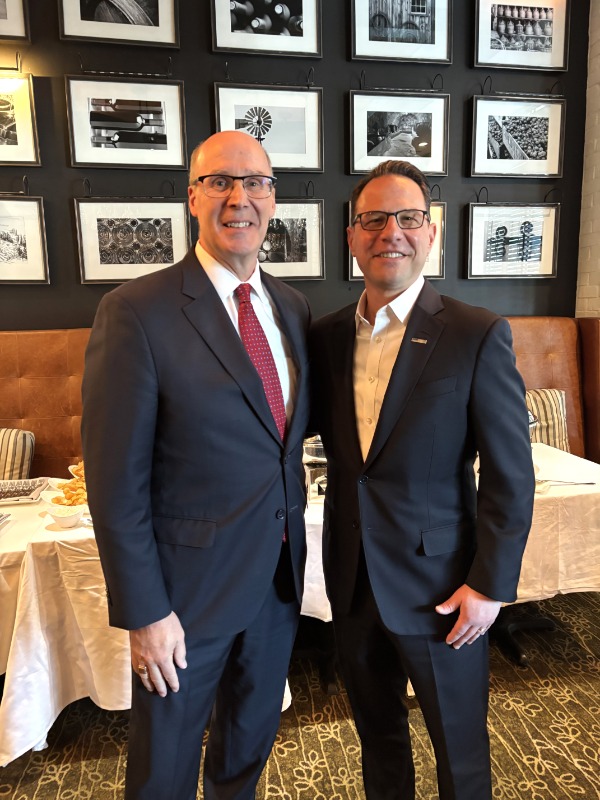
Peter Calcara, PICPA's vice president of government relations, with Gov. Josh Shapiro at a reception in Harrisburg. Calcara was part of the governor's transition and inauguration team in 2022 and 2023.
Charitable Giving Bill
Legislation: Senate Bill 1183 (Sens. Schlegel Culver and Pisciottano); House Bill 965 (Reps. Greiner and Salisbury)
Issue: Updates Pennsylvania’s charitable reporting thresholds and better aligns financial oversight requirements.
Status: Senate Bill 1183 has been referred to the Senate State Government Committee for consideration. Companion legislation has been introduced in the House by Rep. Abigail Salisbury (D-Allegheny) and Rep. Keith Greiner, CPA (R-Lancaster). House Bill 965 is pending before the House State Government Committee. In February 2026, PICPA submitted a letter to the Senate urging support for Senate Bill 1183.
Summary: Sens. Lynda Schlegel Culver (R-Northumberland) and Nick Pisciottano, CPA-Inactive (D-Allegheny) have reintroduced legislation championed by the PICPA to update Pennsylvania’s charitable reporting thresholds and better align financial oversight requirements with the size of an organization. Senate Bill 1183 would increase the monetary levels that trigger mandatory audits, reviews, or compilations by an independent CPA for registered charitable organizations.
Under the proposal, nonprofits receiving $1 million or more in annual contributions would be required to obtain an audit, raising the current audit threshold from $750,000. Organizations receiving between $500,000 and $1 million would be required to undergo either a review or an audit, while those with contributions between $150,000 and $500,000 would need a compilation, review, or audit. Charities receiving less than $150,000 annually would not be subject to mandatory financial statement preparation requirements.
The PICPA believes the updated thresholds strike an appropriate balance between reducing administrative burdens on smaller nonprofit organizations and preserving strong financial accountability and transparency standards for larger charities.
Improving Fairness and Flexibility in Taxpayer Relief Procedures
Legislation: House Bills 855 and 856 (Rep. Webster)
Issue: Simplifies tax administration and reduces burdens for small-business taxpayers.
Status: PICPA continues ongoing discussions with House Finance Committee staff and other stakeholders.
Summary: The Local Taxpayers Bill of Rights provides only limited authority for local taxing bodies to abate interest and penalties, generally restricting relief to situations in which the delay was caused by the taxing authority itself. As a result, taxpayers who miss a filing deadline due to serious illness or other unavoidable circumstances have little recourse at the local level. (Broader abatement authority exists, however, within the City of Philadelphia.)
The PICPA is supporting two legislative proposals designed to promote fairness and improve tax administration. House Bill 855, sponsored by Rep. Joe Webster (D-Montgomery), would amend the Local Taxpayers Bill of Rights to allow local taxing authorities to abate interest or penalties when a taxpayer has acted in good faith, without negligence or intent to defraud, and agrees to pay the outstanding balance without pursuing further appeal. The proposal is aimed at helping those who inadvertently file late or miscalculate taxes owed.
Companion legislation, House Bill 856, would require the Department of Revenue to provide taxpayers with clearer, more detailed explanations in notices of assessment or adjustment. The measure would apply to sales and use tax, personal income tax, and corporate tax matters. In addition, House Bill 856 would also codify when the six-month refund period begins in cases where the department reduces an overpayment to offset a tax adjustment.
Advisory Opinions from Licensing Boards
Legislation: House Bill 1290 (Rep. Greiner)
Issue: Provides licensed professionals with greater clarity when navigating state laws and regulations via advisory opinions from the Department of State’s Bureau of Professional and Occupational Affairs (BPOA).
Status: House Bill 1290 is under consideration in the House Professional Licensure Committee.
Summary: Rep. Keith Greiner, CPA (R-Lancaster), introduced House Bill 1290 which would authorize licensing boards and commissions within the BPOA to issue nonbinding advisory opinions in response to questions from licensees. While these opinions would not carry the force of law, they would offer valuable guidance to professionals seeking to determine whether a contemplated action complies with applicable statutes and regulations.
Under current law, boards and commissions are not expressly authorized to issue advisory opinions. As a result, professionals who request direction are often told that the board lacks the authority to provide formal guidance. Allowing advisory opinions could help prevent inadvertent violations by giving licensees a reliable mechanism to confirm compliance before proceeding.
PICPA CEO Jennifer Cryder, CPA, testified in March 2024 in favor of similar legislation during the prior legislative session. The PICPA continues to urge lawmakers to advance the measure.

At a Sept. 17, 2025, reception honoring Rep. Keith Greiner, CPA (center-right), PICPA members from left to right, Eric Wenger, Stephen Runyeon, and Mike De Stefano.

Reps. Ben Sanchez, CPA-Inactive (D-Montgomery) at right, and Patrick Gallagher (D-Philadelphia) at the CPA-PAC sponsored hole at the House Democratic Campaign Committee (HDCC) golf outing on Oct. 14, 2025.


The PICPA stands ready to work with state lawmakers to accomplish these legislative objectives.
You can support our efforts.
Contributions are not tax deductible.
Government Relations Office
500 N. Third St., Suite 200A
Harrisburg, PA 17101
(717) 232-1821
governmentrelations@picpa.org
PICPA Government Relations Team
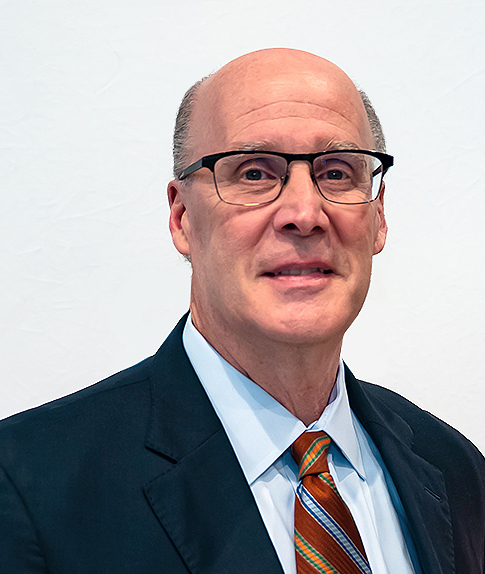
Peter N. Calcara, CAE
Vice President

Annette Knapp
Coordinator